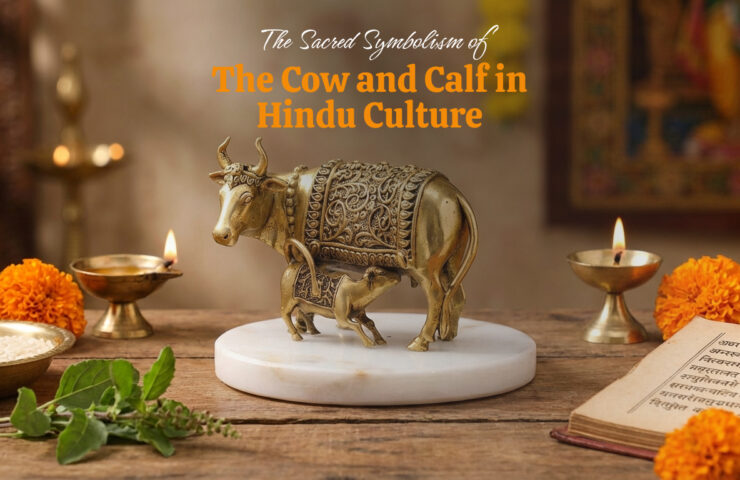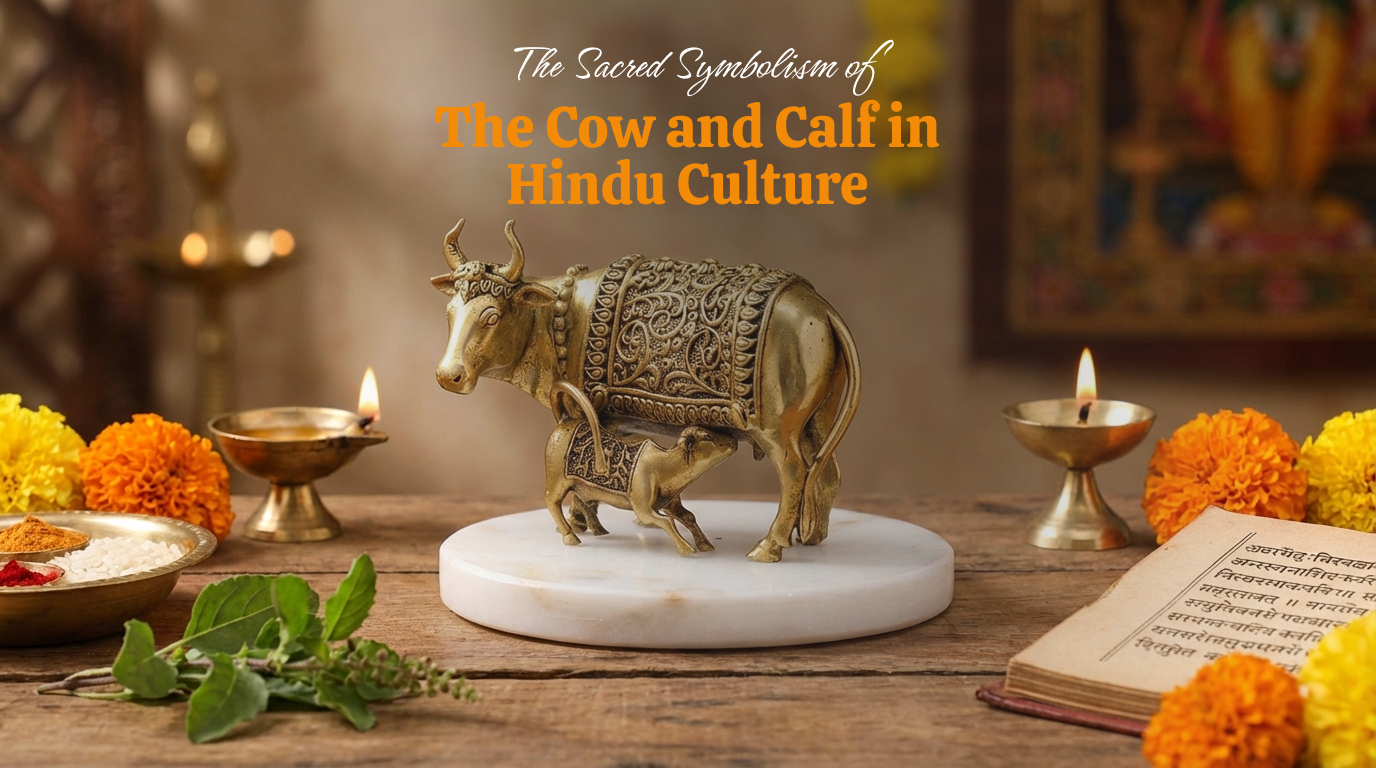
In Hinduism, the cow holds a position of profound reverence. Known as Gomatha (divine mother), the cow is not merely an animal but a sacred symbol representing motherhood, abundance, selflessness, and the Earth itself. A brass Cow and Calf figurine in your home serves as a constant reminder of these noble qualities and invites their blessings into your life.
Why is the Cow Sacred in Hinduism?
The Cow as Kamadhenu
According to Hindu scriptures, Kamadhenu (also called Surabhi) is the divine cow that emerged during the Samudra Manthan (churning of the cosmic ocean). She is believed to be the mother of all cows and is worshipped as a goddess who fulfills all wishes.
The sacred texts describe Kamadhenu as containing all the deities within her body:
- Her four legs represent the four Vedas
- Her horns symbolize the Trinity (Brahma, Vishnu, Shiva)
- Her eyes represent the sun and moon
- Her shoulders represent Agni (fire god)
In the Life of Lord Krishna
The cow is intimately connected with Lord Krishna, who grew up as a cowherd in Vrindavan. Krishna’s love for cows—playing his flute while they grazed, protecting them from danger—is celebrated in countless stories and artworks. The term “Govinda” (one of Krishna’s names) literally means “protector of cows.”
Symbol of Non-Violence
The cow’s gentle, non-aggressive nature makes her a perfect symbol of ahimsa (non-violence), one of the highest virtues in Hindu philosophy. Unlike other animals, the cow gives without taking—offering milk, butter, and ghee while asking only for grass and water.
The Meaning Behind Cow and Calf Together
When you see a mother cow with her calf, you witness one of nature’s most tender relationships. This imagery carries deep spiritual significance:
Maternal Love and Nourishment
The cow with her calf represents unconditional motherly love. She nourishes not only her offspring but also the human family, sharing her milk selflessly.
Family Harmony
The pair symbolizes family bonds, particularly the relationship between mother and child. Placing this figurine in your home is said to strengthen family ties and bring domestic peace.
Abundance and Fertility
In agrarian India, a healthy cow with a calf signified prosperity. This association continues today—the figurine invites abundance and growth into the household.
Dharma and Righteousness
Caring for cows is considered one of the most meritorious acts in Hinduism. Having their image in your home reflects a commitment to dharma (righteous living).
Brass Cow and Calf Figurines in Home Decor
A brass Gomatha figurine serves multiple purposes in an Indian home:
For the Puja Room
Place the Cow With Calf Big in your mandir to:
- Invoke blessings of abundance during daily puja
- Remember the teachings of Lord Krishna
- Offer prayers for family well-being
As a Living Room Centerpiece
The Cow W Calf Small works beautifully as:
- A conversation piece reflecting your cultural values
- A subtle reminder of maternal love and sacrifice
- An elegant statement of traditional aesthetics
Perfect Pairing with Nandhi
For Shiva devotees, placing a Nandhi (Shiva’s sacred bull) alongside the Cow and Calf creates a complete bovine sanctuary in your home.
When to Gift a Cow and Calf Figurine
The Cow and Calf figurine is a thoughtful gift for:
| Occasion | Significance |
|---|---|
| Housewarming | Blesses the home with abundance |
| Baby Shower | Celebrates motherhood and new life |
| Wedding Anniversary | Honors the nurturing bond between partners |
| Mother’s Day | Perfect tribute to maternal love |
| Krishna Janmashtami | Celebrates Krishna’s connection with cows |
| Gopashtami | The festival specifically honoring cows |
Associated Festivals and Rituals
Gopashtami
Celebrated on the eighth day of the bright fortnight in the month of Kartik, Gopashtami honors the day when young Krishna was entrusted with grazing cows. Devotees worship cows and offer them special food.
Govardhan Puja
During this festival (the day after Diwali), cows are decorated and worshipped. Having a Cow and Calf figurine allows urban families to participate in this tradition.
Daily Cow Puja
Many families offer a small portion of the first roti to cows daily. The figurine serves as a reminder of this practice and can receive symbolic offerings when live cows aren’t accessible.
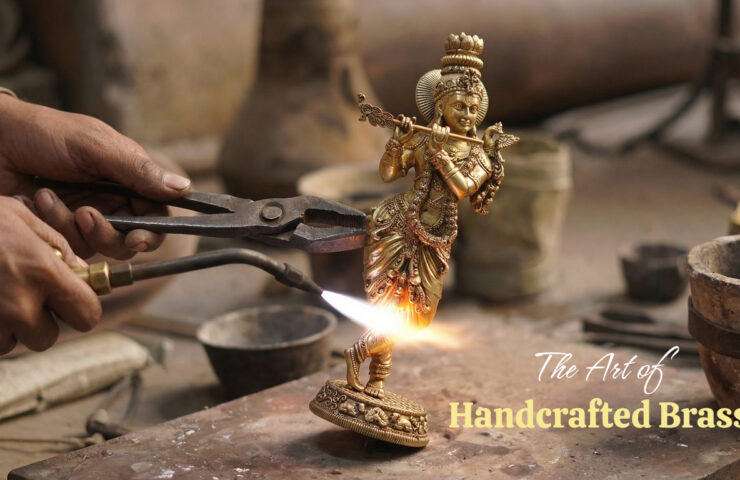
The Art of Brass Cow Figurines
Handcrafted brass figurines capture the gentle beauty of the sacred cow:
Traditional Techniques:
- Lost-wax casting creates intricate details
- Hand-finishing adds unique character to each piece
- Traditional patina develops naturally over time
Symbolism in Design:
- The cow’s peaceful expression reflects her sattvic nature
- The calf’s playful pose represents joy and new beginnings
- Decorative bells and ornaments honor the cow’s sacred status
Caring for Your Brass Cow Figurine
Keep your Gomatha figurine at its radiant best:
Weekly: Dust gently with a soft, dry cloth
Monthly: Clean with a paste of:
- 2 tablespoons tamarind pulp
- 1 teaspoon salt
- Gentle circular motions, then rinse and dry completely
Quarterly: For deep cleaning, use lemon juice with baking soda
Avoid: Harsh chemical cleaners that can damage the brass
Placement According to Vastu
For optimal energy flow:
- East-facing puja rooms: Place in the northeast corner
- North-facing puja rooms: Place in the east corner
- Living room: Position where natural light falls on the figurine
- Avoid: Bathrooms, bedrooms, and kitchen (if used for puja purposes)
Lakshalaya offers beautifully crafted brass Cow and Calf figurines that bring the sacred blessings of Gomatha into your home. Each piece is selected for its artistry and spiritual significance.
Shop Now:
- Cow With Calf Big – For larger spaces and prominent display
- Cow W Calf Small – Perfect for compact spaces