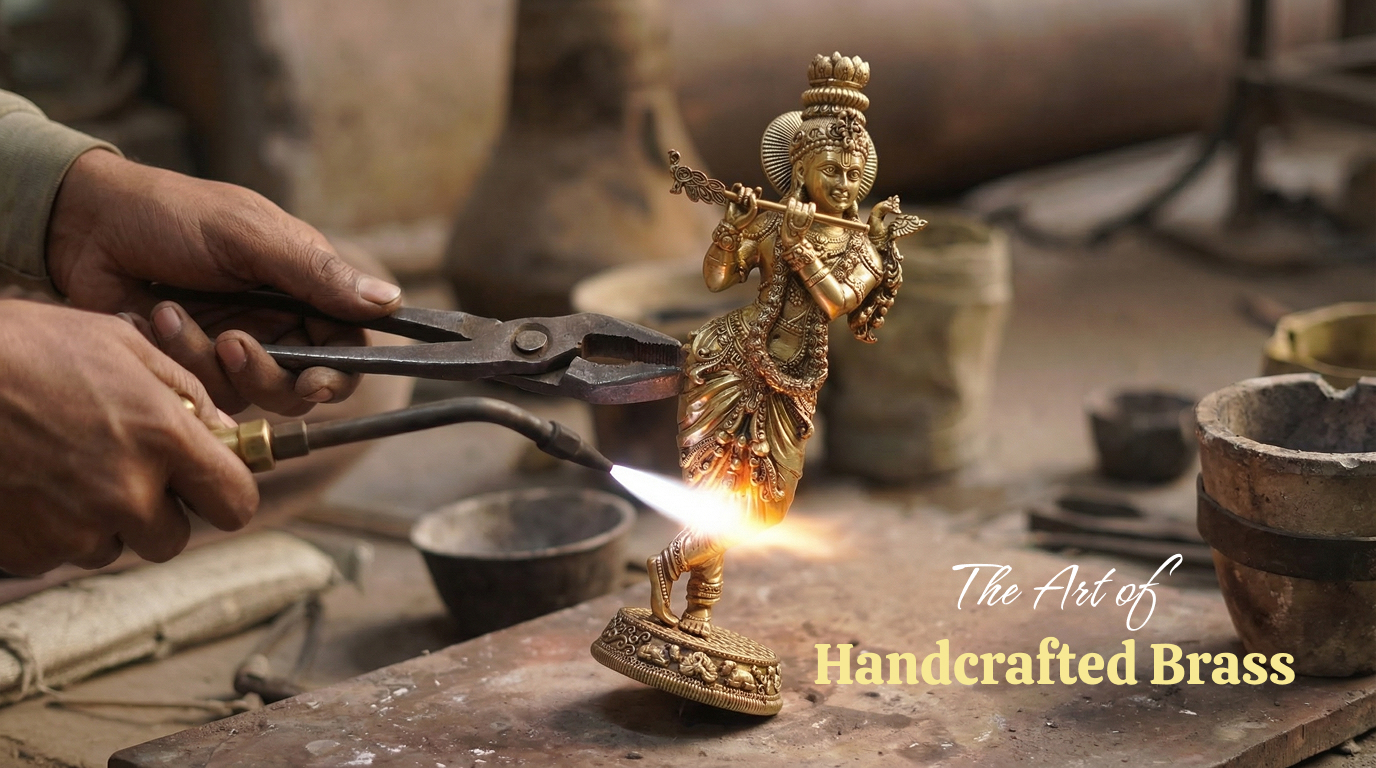
Behind every brass lamp, idol, and figurine at Lakshalaya lies centuries of artisanal tradition. These aren’t mass-produced objects—they are works of devotion, created by skilled craftspeople using techniques passed down through generations. Understanding this art form deepens your appreciation for the sacred items that grace your home.
The History of Indian Brass Work
Brass craftsmanship in India dates back over 5,000 years. Archaeological finds from the Indus Valley Civilization include sophisticated metal objects, proving that metalworking was already highly developed in ancient India.
Regional Centres of Excellence
Moradabad, Uttar Pradesh: Known as “Brass City,” Moradabad has been the heart of North Indian brass work for over 400 years. The city’s artisans are renowned for intricate engraving and geometric patterns.
Thanjavur, Tamil Nadu: Famous for Thanjavur Art Plates and traditional lamps. Thanjavur work often includes copper, silver, and gold inlay on brass surfaces.
Kanchipuram, Tamil Nadu: Known for temple bronzes and traditional vilakkus (lamps). Many of our traditional South Indian lamps come from artisan families in this region.
Pembarthi, Telangana: Home to the traditional sheet metal work known as Pembarthi Brass Art, featuring intricate hammered patterns.
Bhootan, Odisha: Master craftspeople here create the famous Dokra figures using the lost-wax method.
Traditional Techniques
1. Lost-Wax Casting (Cire Perdue / Madhu Uchhistha Vidhana)
This ancient technique—mentioned in texts over 3,000 years old—creates the most detailed brass sculptures.
The Process:
Step 1: The Wax Model The artisan sculpts a precise wax model of the desired object. Every detail—facial expressions, jewelry, fabric folds—must be perfect, as this determines the final result. True masters spend years perfecting their wax sculpting skills.
Step 2: Creating the Mold The wax model is coated with multiple layers of fine clay mixed with organic materials. Each layer must dry completely before the next is applied. This process can take days or weeks.
Step 3: Melting the Wax The clay-covered model is heated, causing the wax to melt and drain out (hence “lost wax”). What remains is a hollow clay mold with the exact negative impression of the original sculpture.
Step 4: Pouring the Metal Molten brass (heated to over 900°C) is poured into the hollow mold. The artisan must work quickly and precisely—a moment’s hesitation can ruin hours of work.
Step 5: Revealing the Sculpture Once cooled, the clay mold is carefully broken away, revealing the brass sculpture inside. This is a delicate moment—there’s only one chance.
Step 6: Finishing The rough casting is refined through filing, polishing, and hand-finishing. Master artisans spend hours on this stage, bringing out subtle details.
Products using this technique:
2. Sand Casting
A faster technique suitable for simpler forms and larger quantities.
The Process:
- A pattern (usually wood or metal) is pressed into damp sand
- The pattern is removed, leaving a cavity
- Molten brass is poured in
- After cooling, the piece is removed and finished
Products using this technique:
3. Sheet Metal Work (Repousse)
This technique involves hammering brass sheets from the back to create raised designs on the front.
Characteristics:
- Thinner, lighter objects
- Intricate surface patterns
- Often used for decorative lamps and vessels
4. Engraving and Chasing
After casting, artisans often add surface details:
Engraving: Cutting into the metal surface to create patterns Chasing: Pushing metal from the front to create texture without removing material
Many lamps feature engraved mantras, decorative borders, or floral patterns added through these techniques.
The Making of a Gajalakshmi Vilakku
Let’s follow the creation of one of Lakshalaya’s most beloved items—the Gajalakshmi Vilakku:
Day 1-3: The Design
The master artisan sketches the design, balancing traditional iconography with practical considerations. The Gajalakshmi form—Lakshmi flanked by elephants—follows strict scriptural guidelines.
Day 4-10: Wax Sculpting
Using soft wax, each element is carefully sculpted:
- The central Lakshmi figure with precise hand gestures (mudras)
- Two elephants in symmetrical poses
- The lamp base with multiple wick holders
- Decorative elements (lotus petals, traditional patterns)
Day 11-14: Mold Making
Layer by layer, clay coating builds up over the wax. This creates a heat-resistant mold that will withstand molten brass.
Day 15: The Pour
Early morning, when temperatures are stable, the molten brass is poured. This critical moment determines success or failure.
Day 16-18: Finishing
After cooling and mold removal:
- Rough edges are filed
- Surface is smoothed
- Details are enhanced with fine tools
- Initial polishing reveals the golden surface
Day 19-20: Final Polish
The lamp receives its final polish, bringing out the warm brass glow that will illuminate homes for generations.
The Artisan’s Life
Traditional brass workers often belong to families that have practiced the craft for many generations:
Training: Begins in childhood, with formal apprenticeship lasting 5-10 years
Specialization: Many artisans focus on specific skills—one family might specialize in wax modeling, another in finishing
Seasonal Work: Demand peaks before major festivals (Diwali, Navratri, wedding season)
Guru-Shishya Tradition: Skills are transmitted through the traditional guru-student relationship
Why Handcrafted Matters
1. Each Piece is Unique
No two handcrafted items are identical. Small variations in surface texture, proportions, or patina make each piece one-of-a-kind.
Compare this to:
Even these similar items show subtle differences in expression and posture.
2. Energy of Creation
Traditional artisans often work with devotional intent. Many begin their day with prayer, and some chant mantras while crafting religious objects. This spiritual focus is believed to imbue the objects with positive energy.
3. Supporting Living Traditions
When you purchase handcrafted brass, you support:
- Artisan families and communities
- Preservation of ancient techniques
- Cultural heritage
- Sustainable livelihoods
4. Environmental Responsibility
Traditional brass work is inherently sustainable:
- Brass is 100% recyclable
- No electricity-intensive machinery
- Minimal packaging traditionally
- Items last for generations
How to Identify Quality Brass Work
Weight
Quality brass has substantial weight. Light pieces may contain more zinc (cheaper) or be hollow.
Sound
Genuine brass produces a clear, resonant ring when tapped. Dull sounds suggest inferior alloys.
Details
Examine fine details:
- Are the faces expressive?
- Is the surface smooth and even?
- Are there consistent patterns?
Finish
Quality pieces have even colouring and smooth surfaces without pitting or rough patches.
Maker Knowledge
Reputable sellers like Lakshalaya know their sources and can speak to the craftsmanship behind each piece.
Caring for Handcrafted Brass
Handcrafted items deserve thoughtful care:
Weekly Maintenance:
- Dust with a soft, dry cloth
- Remove any oil residue after puja
Monthly Cleaning: Traditional cleaning paste:
- 2 tablespoons tamarind pulp
- 1 teaspoon salt
- Mix, apply, rub gently, rinse, dry completely
Alternative:
- Lemon juice and baking soda paste
- Apply, wait 5 minutes, rub gently, rinse
What to Avoid:
- Harsh chemical cleaners
- Abrasive scrubbers
- Leaving water to dry on the surface
The Patina Question: Over time, brass develops a darker patina. This is natural and considered auspicious—it shows the item’s history of worship. Some prefer to preserve this patina rather than polishing to a bright finish.
Featured Handcrafted Pieces
Each of these items from Lakshalaya represents the best of traditional craftsmanship:
| Category | Product | Craftsmanship Highlight |
|---|---|---|
| Lamps | Aarumuga Vilakku With Vel | Complex multi-element design |
| Lamps | Vel Mayil Vilaku | Delicate peacock details |
| Idols | Shivan Big | Expressive facial features |
| Idols | Rajarajeshwari | Intricate jewelry and crown |
| Idols | Perumal | Classical iconography |
| Figurines | Nandhi | Muscular definition, ornaments |
| Decorative | Ashtalakshmi Kalash | Eight goddess figures in relief |
The Future of the Craft
Traditional brass craft faces challenges:
- Competition from machine-made items
- Young people leaving for other careers
- Rising material costs
Yet the art continues because:
- Discerning buyers seek authenticity
- Cultural pride in heritage crafts
- Temple and religious demand remains steady
- Export interest from diaspora communities
By choosing handcrafted brass from sources like Lakshalaya, you become part of sustaining this ancient tradition for future generations.
Every handcrafted piece at Lakshalaya carries the skill, devotion, and heritage of India’s master artisans. When you bring one into your home, you’re welcoming centuries of tradition and blessing.